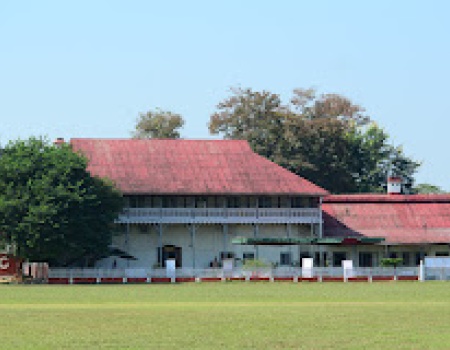
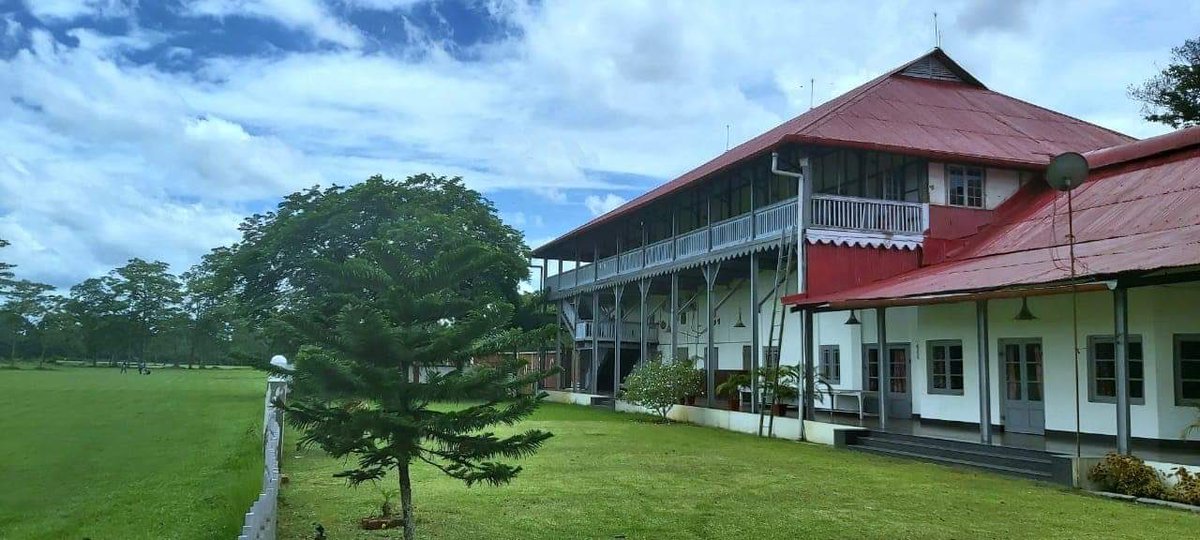
Jorhat Gymkhana Club is a multi-sport arena and a social club located in Jorhat, Assam, built in 1876 by D. Slimmons. It has venues for horse racing, lawn tennis, swimming, billiards & snooker, horse polo, 18-hole golf course, and cricket.
The Golf Course at the Jorhat Gymkhana Club is one of the most historically significant golf courses in the world. Established in 1876, it is widely recognized as Asia's oldest golf course and among the oldest golf courses outside the British Isles. It represents the origins of golf in India's tea-growing region and remains a living example of colonial sporting heritage.
Origins of Golf at JGC (1876)
The course was laid out in 1876 by British tea planters who had settled in Upper Assam during the rapid expansion of the tea industry. The club was established under the leadership of D. Slimmon, then Secretary of the Club, at Seconidhara on the outskirts of Jorhat. Initially conceived as a recreation ground for tea planters, the property combined a horse racing track, a golf course, polo grounds, tennis courts & social club facilities.
The golf course was ingeniously designed inside the horse racing circuit, a layout that still defines its unique character today.
One of the World's Oldest Golf Courses
The course is often described as: a) Oldest golf course in Asia, b) Second oldest golf course outside the British Isles, c) Among the world's oldest surviving golf courses
These distinctions are widely used by tourism authorities and the club itself.
Historic Golf Tournaments
By the early twentieth century, Jorhat Gymkhana had become one of eastern India's premier golfing venues. Among its historic trophies are: Beg Dunlop Cup (first played in 1902; winners engraved from 1903 onwards), Craig Cup, Lamprell Cup (1945), Ruston Cup (1954), Jorehaut Cup, Jorhat Open Golf (Signature event), ONGC Cup, IOC Cup, Rhino Army Cup, ASC Cup, Bokahola Cup, ATPA Cup, ABITA Cup, Jorhat Gymkhana Premier Golf League, IGU Northeast Amateur Championship
Expansion to 18 Holes
For more than a century the course remained a 9-hole layout. In 1995, with assistance from the Indian Army and neighboring tea estates, an 18-hole championship configuration was developed while preserving the historic nine-hole core. This enabled larger tournaments while maintaining the heritage character of the original course.
Architectural Character of the Golf Course
The golf course is renowned for its mature century-old trees, rolling natural terrain, narrow fairways, multiple water-bodies, fast greens, horse racing track surrounding the course & 150 year old colonial clubhouse overlooking the course.
Unlike modern resort courses, Jorhat offers a traditional golfing experience where history and landscape remain largely unchanged.
Heritage Significance of the golf course at JGC
The golf course forms part of the larger heritage of the Jorhat Gymkhana Club, which also became a center for horse racing, polo, cricket, billiards, swimming, tennis and social life in colonial Assam. The annual Governor's Cup remains one of its best-known golfing traditions, and the course is frequently highlighted by Assam tourism for its historic importance.
Legacy
As Jorhat Gymkhana Club celebrates its 150th anniversary in 2026, its golf course stands not only as one of the oldest continuously played courses in the world but also as a symbol of Assam's tea heritage and sporting legacy. Few golf courses anywhere can claim nearly a century and a half of uninterrupted play on the same historic grounds, making Jorhat Gymkhana a landmark in the history of golf in Asia.
Cricket at Jorhat Gymkhana Club
The Cricket ground is known as Jorhat Gymkhana Ground and has a capacity of 8,000 with a turf wicket. The ground hosted the matches of the CK Nayudu Trophy and women's national championship.
Cricket in Early Years (1876–1947)
During the late 19th and early 20th centuries, cricket at Jorhat Gymkhana was primarily played by British tea planters, military officers, and civil administrators. Matches were often organized between Tea garden teams, Military units stationed in Upper Assam, Civil Service and Railway teams & visiting clubs from Dibrugarh, Shillong, Tezpur and Calcutta.
These fixtures became important social events within Assam's tea plantation community and helped introduce organized cricket to Upper Assam. Although detailed scorebooks from this period are scarce, newspaper archives indicate that cricket was one of the club's principal sporting activities alongside golf and horse racing.
Post-Independence Cricket Development
After 1947, the club gradually transformed from a planter-exclusive institution into a community sporting venue. Cricket became increasingly accessible to local players and clubs.
The Jorhat Gymkhana Ground evolved into one of the premier cricket venues in Upper Assam, regularly hosting District-level competitions, Inter-club tournaments, School and college cricket, Practice sessions for leading local clubs.
The turf wicket established the ground as one of the better cricket facilities in the region.
Domestic Cricket Venue
In recent decades, Jorhat Gymkhana Ground has hosted several important domestic competitions under the aegis of the Board of Control for Cricket in India and the Assam Cricket Association, including: CK Nayudu Trophy (Under-23 Men's Championship), Senior Women's National Cricket Championship, Various ACA age-group tournaments, Inter-district championships.
Hosting these tournaments brought several of India's emerging cricketers to Jorhat before they progressed to first-class and international cricket.

